
NOVA LAB
Peptide research and regenerative biology insights
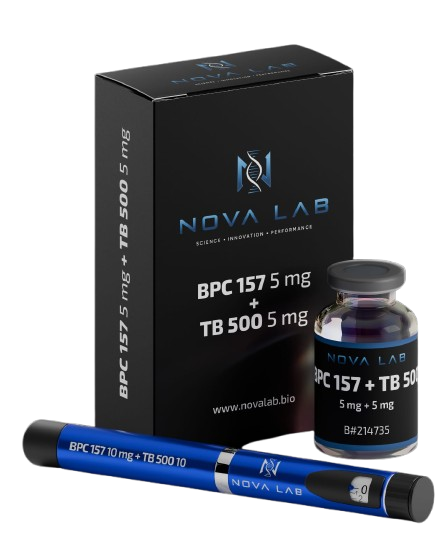
BPC-157 and TB-500 are experimental peptide compounds that have attracted
scientific interest in the fields of tissue repair, cellular signaling,
vascular biology, and regenerative research.
Research involving these compounds is focused on understanding their
biological activity and potential interactions with processes involved
in tissue response, cellular migration, angiogenesis, and repair.
NOVA LAB
Exploring peptide signaling and regenerative research
BPC-157 and TB-500 have become subjects of experimental research because
of their proposed interactions with biological processes associated with
tissue response and repair.
Research has explored mechanisms involving cellular migration,
vascular responses, inflammatory signaling, and interactions with
biological pathways involved in tissue recovery.
The available evidence remains primarily preclinical, and further
research is required to establish the safety, efficacy, pharmacology,
and potential clinical applications of these compounds.
NOVA LAB
Biological pathways investigated in BPC-157 and TB-500 research
Research on BPC-157 and TB-500 explores distinct but overlapping biological processes associated with cellular activity, tissue response, vascular function, and inflammatory signaling. Most of the available evidence comes from preclinical research, and the mechanisms observed in experimental models have not been established as clinical effects in humans.
BPC-157 and TB-500 have been investigated in relation to cellular communication, migration, cytoskeletal activity, and biological responses involved in tissue remodeling.
Experimental research has examined potential relationships between these peptides and vascular biology, including angiogenic signaling and processes involved in vascular response and tissue blood supply.
Preclinical studies have investigated BPC-157 and TB-500 in models involving inflammatory responses, tissue injury, extracellular matrix activity, and processes associated with experimental tissue repair.
NOVA LAB
Key biological areas investigated in BPC-157 and TB-500 research
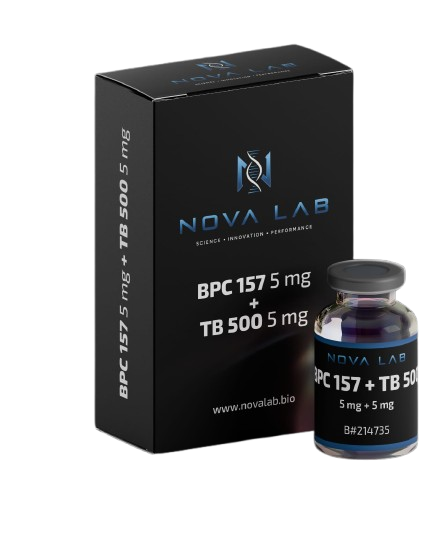
Experimental research examines cellular migration processes involved in tissue response.
Studies investigate potential interactions with vascular and angiogenic processes.
Research focuses on biological mechanisms involved in tissue remodeling and structural response.
Experimental models have examined pathways associated with inflammatory and cellular responses.
BPC-157 and TB-500 are studied as part of broader research into regenerative biological processes.
Current evidence is largely based on laboratory and preclinical research models.
NOVA LAB
Current scientific understanding and research limitations
BPC-157 and TB-500 remain experimental compounds and are primarily
investigated through preclinical and laboratory research.
Research programs have explored areas including tissue response,
vascular biology, cellular signaling, inflammation, and regenerative
mechanisms. However, the available evidence does not establish these
compounds as approved medical treatments.
Further research is required to better understand their pharmacology,
safety profile, biological activity, and potential clinical relevance.
NOVA LAB
Analytical documentation and product verification
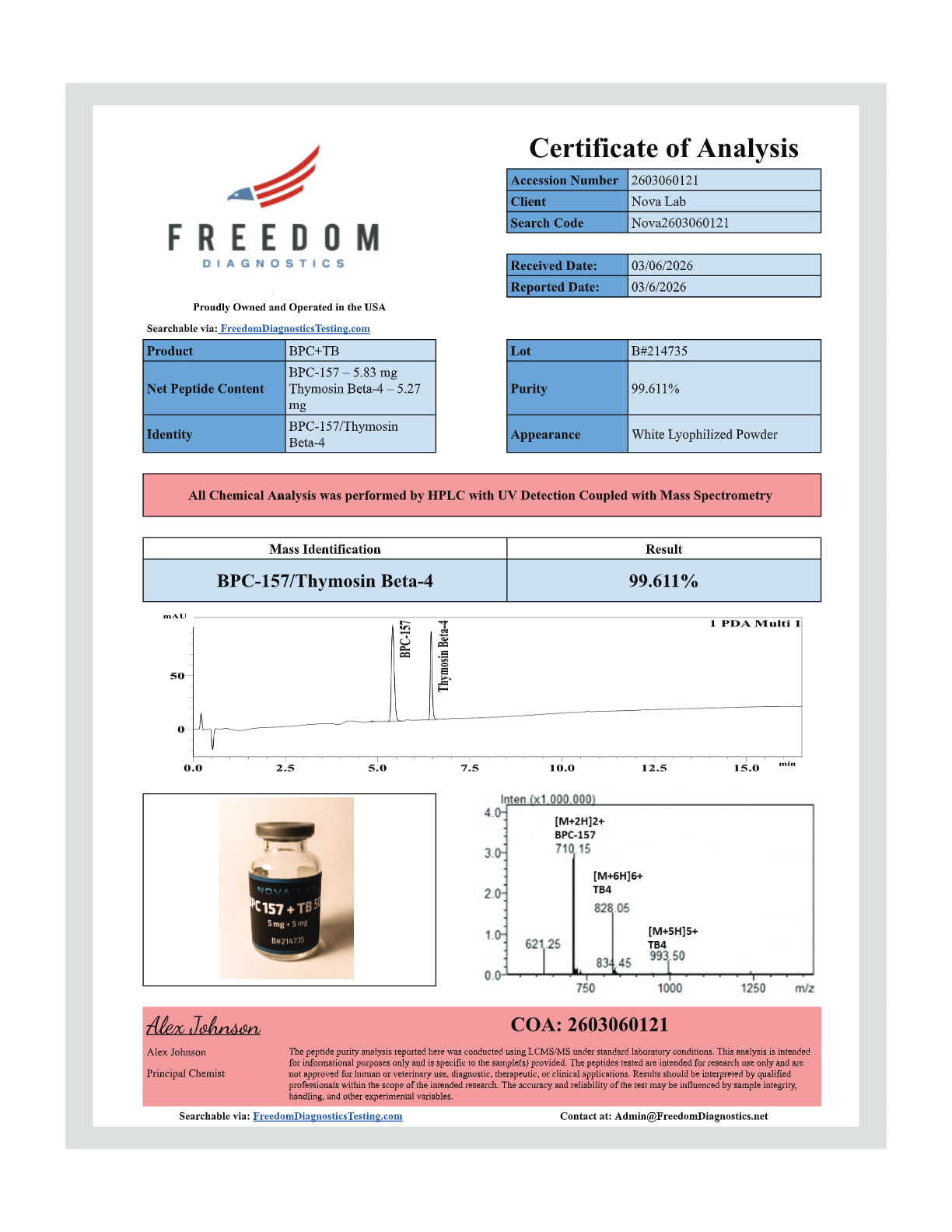
Analytical documentation for BPC-157 + TB-500 is provided to document the reported composition and analytical characteristics of the sample.
The available certificate contains identification and verification information that can be reviewed against the original report.
Freedom Diagnostic Testing:
freedomdiagnosticstesting.comNOVA LAB
Key information about BPC-157 and TB-500 research
The information provided on this website is intended for educational and informational purposes only. BPC-157 and TB-500 are experimental compounds and are not presented as approved medical treatments.