
NOVA LAB
Copper-binding peptide research and cellular biology
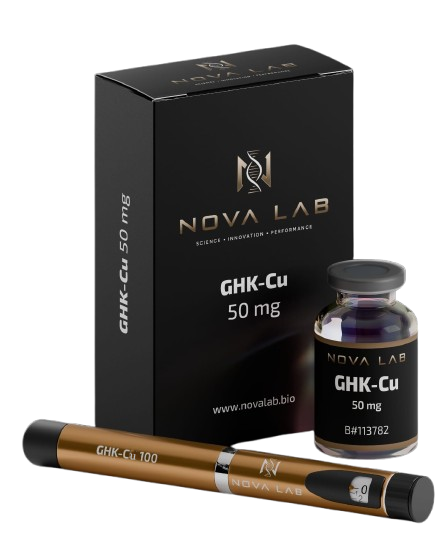
GHK-Cu is a naturally occurring copper-binding peptide
complex consisting of the tripeptide glycyl-L-histidyl-L-lysine
(GHK) associated with copper ions.
GHK has been studied in biological research because of its
ability to interact with copper and its proposed involvement
in cellular signaling, extracellular matrix processes, and
tissue biology.
Research surrounding GHK-Cu has examined a range of biological
processes including collagen-related activity, cellular
communication, tissue remodeling, and responses associated
with oxidative and inflammatory signaling.
NOVA LAB
Understanding the biological role of the GHK-Cu peptide complex
GHK-Cu is a naturally occurring copper-peptide complex formed by the binding of copper to the tripeptide glycyl-L-histidyl-L-lysine (GHK). Its unique research profile comes from the combination of peptide signaling and copper-dependent biological activity. Research has investigated GHK-Cu in relation to extracellular matrix regulation, collagen-associated processes, cellular signaling, inflammation, and tissue remodeling, particularly within the field of skin and connective-tissue biology. These mechanisms continue to be investigated across laboratory, preclinical, and selected clinical research models.
NOVA LAB
Biological pathways investigated in GHK-Cu research
Research involving GHK-Cu examines biological processes associated with copper-dependent cellular activity, extracellular matrix regulation, tissue remodeling, and skin biology. Current research includes laboratory, preclinical, and selected clinical investigations, with evidence varying depending on the application and research model.
GHK-Cu has been investigated in relation to extracellular matrix activity, collagen-associated processes, and biological mechanisms involved in maintaining and remodeling connective tissue.
Research has examined how the GHK-Cu complex may interact with cellular signaling pathways involved in gene expression, cellular communication, oxidative stress, and tissue response.
Experimental research has investigated GHK-Cu in relation to skin biology, wound-response mechanisms, inflammation, and processes associated with tissue remodeling and repair.
NOVA LAB
Biological areas investigated in GHK-Cu research
GHK-Cu has been investigated in relation to collagen-associated processes and extracellular matrix biology.
Research explores potential relationships between GHK-Cu signaling and connective tissue processes.
Experimental research examines how copper-binding peptides may influence cellular signaling pathways.
GHK-Cu has been studied in experimental models involving biological processes associated with tissue remodeling.
Researchers have investigated potential relationships between GHK-Cu and cellular responses associated with oxidative processes.
GHK-Cu has been studied in the context of skin biology, extracellular matrix components, and cellular activity.
NOVA LAB
Current scientific understanding and research areas
GHK-Cu has been investigated across a range of experimental
and biomedical research areas, particularly those involving
copper-dependent biology, cellular signaling, extracellular
matrix activity, and tissue processes.
Research has examined its relationship with collagen-related
processes, connective tissue biology, skin biology, cellular
communication, and tissue remodeling.
Although GHK-Cu is a subject of scientific and cosmetic
research, research findings should be interpreted within
the limitations of the available evidence. The presence of
experimental findings does not by itself establish a
specific medical indication or therapeutic outcome.
NOVA LAB
Analytical documentation and product verification
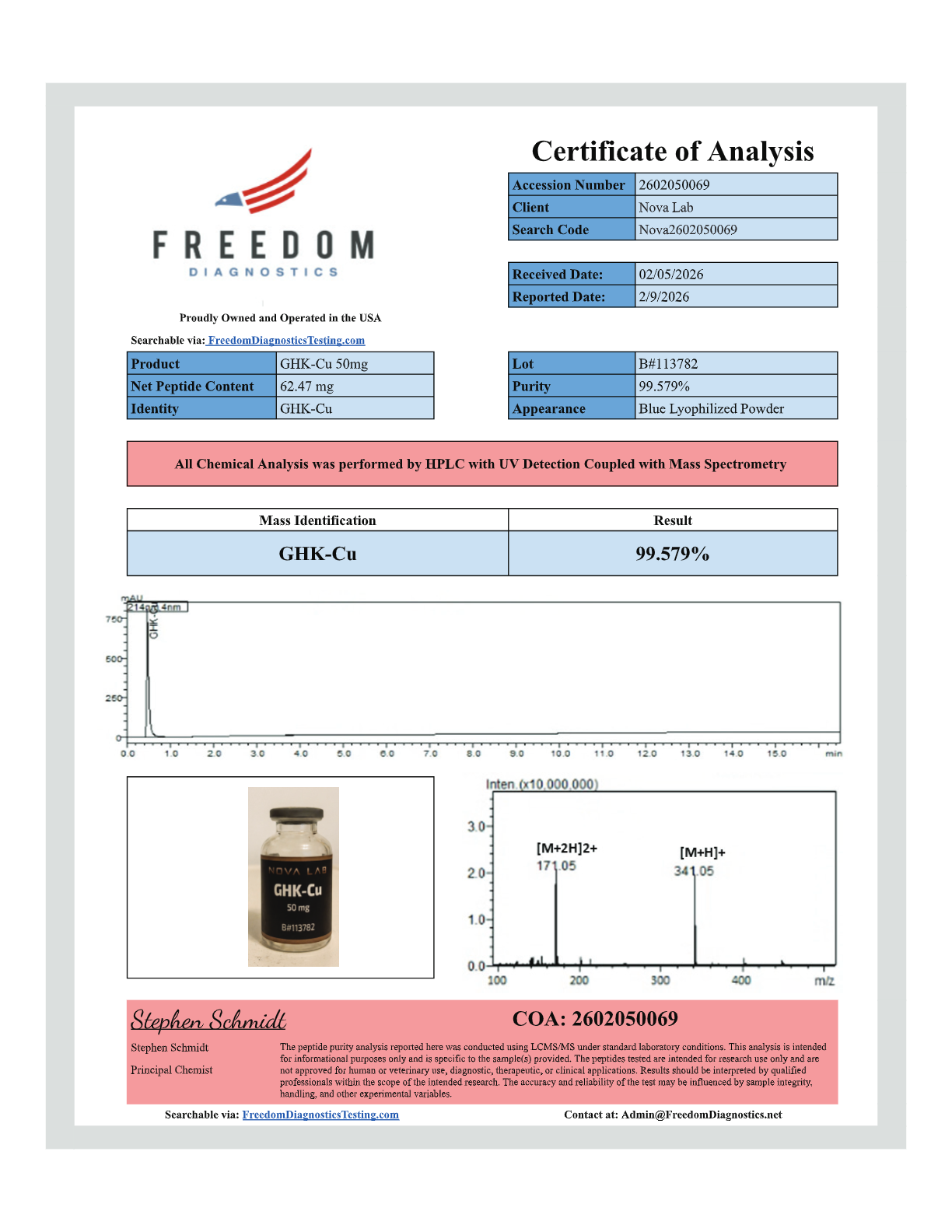
Analytical documentation for GHK-Cu is provided to document the reported composition and analytical characteristics of the sample.
The available certificate contains identification and verification information that can be reviewed against the original report.
Freedom Diagnostic Testing:
freedomdiagnosticstesting.comNOVA LAB
Key information about our research topics and methodologies
The information provided on this website is intended for educational and informational purposes only. GHK-Cu is a research compound, and available evidence does not establish its safety or effectiveness as a treatment for any specific medical condition.