
NOVA LAB
Cellular energy metabolism and biological research insights
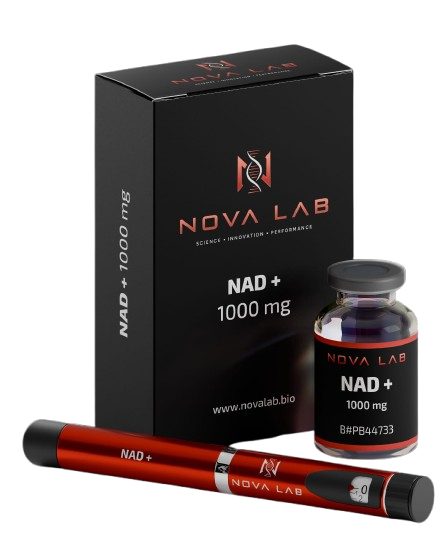
NAD+ (nicotinamide adenine dinucleotide) is a naturally occurring
coenzyme found in cells throughout the body.
It plays an important role in cellular energy metabolism,
oxidation-reduction reactions, and several enzymatic processes.
NAD+ is also involved in biological pathways associated with
mitochondrial function, cellular signaling, and DNA-related processes.
Because NAD+ participates in fundamental cellular processes,
its metabolism and regulation are active areas of biomedical research.
NOVA LAB
Understanding the central role of NAD+ in cellular metabolism
NAD+ is a fundamental cellular coenzyme involved in a wide range of biological processes. It plays an essential role in redox reactions that support energy metabolism and is also involved in cellular signaling and enzyme activity. What makes NAD+ particularly important in biological research is its connection to both metabolic energy production and cellular maintenance pathways, making NAD+ metabolism an active area of investigation across multiple fields of research.
NOVA LAB
Biological pathways investigated in NAD+ research
Research involving NAD+ focuses on its central role as a cellular coenzyme involved in energy metabolism, redox reactions, and multiple signaling processes. Current research examines how NAD+ availability and metabolism relate to mitochondrial function, cellular maintenance, and metabolic regulation.
NAD+ is involved in oxidation-reduction reactions that support cellular energy production and metabolic processes within mitochondria and other cellular compartments.
Research examines the NAD+/NADH redox system and its role in maintaining cellular redox balance and supporting biochemical reactions throughout the cell.
NAD+ also participates in cellular signaling pathways and serves as a substrate for enzymes involved in processes related to DNA repair, stress responses, and cellular regulation.
NOVA LAB
Key biological areas associated with NAD+ metabolism
NAD+ is an essential component of cellular metabolic reactions involved in energy production.
Research examines the relationship between NAD+ metabolism and mitochondrial activity.
NAD+ and NADH form an important redox pair involved in electron-transfer reactions.
NAD+ serves as a substrate for several enzymes involved in cellular maintenance and DNA-related biological processes.
NAD+-dependent enzymes are being studied for their role in cellular signaling and regulation.
Changes in NAD+ metabolism are being investigated in connection with cellular aging and age-related biological processes.
NOVA LAB
Current scientific understanding of NAD+ biology
NAD+ is a well-established biological coenzyme and an essential
component of cellular metabolism.
Current research continues to investigate how NAD+ metabolism
changes under different physiological conditions and how
NAD+-dependent pathways interact with mitochondrial function,
cellular signaling, DNA-related processes, and aging biology.
While NAD+ biology is well characterized, research into NAD+
supplementation and therapeutic applications remains an
active area of investigation. The effects of different
approaches may depend on factors including biological context,
delivery method, and individual physiology.
NOVA LAB
Analytical documentation and product verification
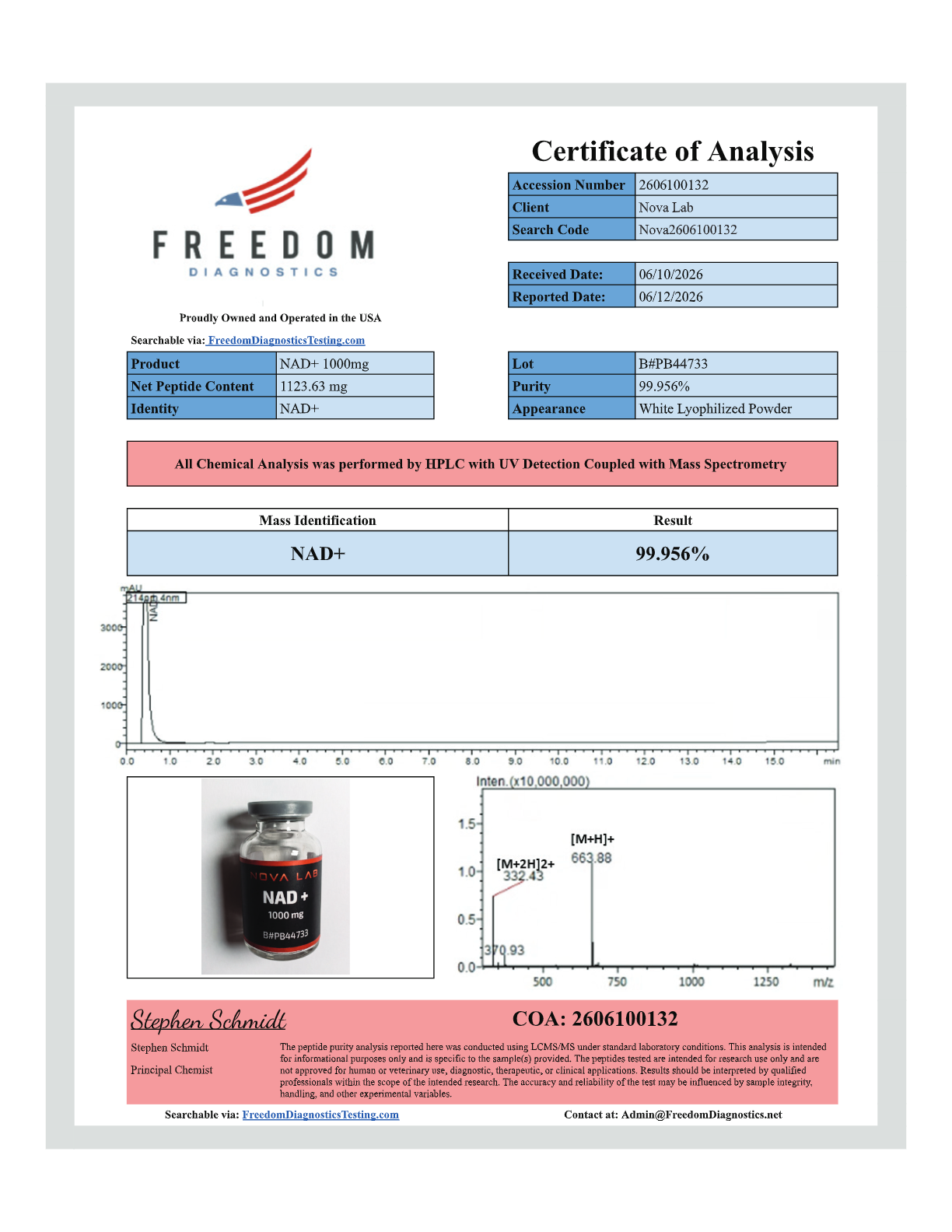
Analytical documentation for NAD+ is provided to document the reported composition and analytical characteristics of the sample.
The available certificate contains identification and verification information that can be reviewed against the original report.
Freedom Diagnostic Testing:
freedomdiagnosticstesting.comNOVA LAB
Key information about our research topics and methodologies
The information provided on this website is intended for educational and informational purposes only. NAD+ and NAD+-related compounds are subjects of ongoing scientific and clinical research, and research findings do not establish that NAD+ supplementation is effective for any specific medical condition.