

NOVA LAB
Growth hormone biology and metabolic research insights
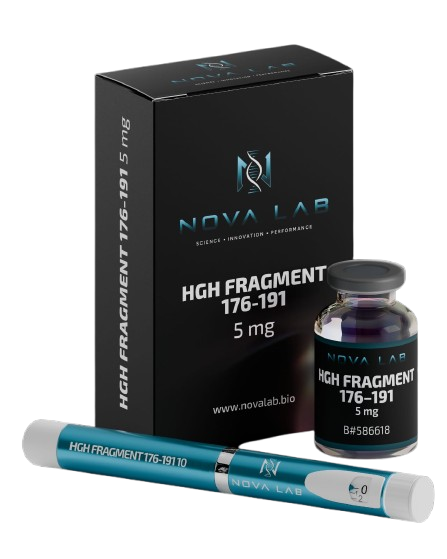
HGH Fragment 176-191 is a synthetic peptide fragment derived
from the C-terminal region of human growth hormone.
The fragment has been investigated in experimental research
because of its proposed relationship with processes involved
in lipid metabolism, adipose tissue biology, and metabolic
signaling.
Research into this peptide fragment is primarily focused on
understanding its biological activity and its relationship
with pathways associated with fat metabolism and energy
regulation.
NOVA LAB
Understanding the research interest surrounding the C-terminal region of human growth hormone
HGH Fragment 176-191 represents a specific sequence from the C-terminal region of human growth hormone and has been studied separately from the complete hormone. Its scientific interest comes primarily from research into its potential relationship with lipid metabolism and adipose tissue biology. Unlike full-length growth hormone, research on this fragment has focused more specifically on metabolic mechanisms associated with the C-terminal region. Most of the available evidence remains preclinical, making HGH Fragment 176-191 an ongoing subject of experimental research.
NOVA LAB
Biological pathways investigated in HGH Fragment 176-191 research
Research involving HGH Fragment 176-191 focuses primarily on biological processes associated with the C-terminal region of human growth hormone and its relationship to lipid metabolism. Current research areas include fat metabolism, adipose tissue signaling, and metabolic pathways investigated in experimental models.
Experimental research has investigated the relationship between HGH Fragment 176-191 and processes involved in lipid metabolism, including mechanisms associated with fat utilization and storage.
Research has examined potential effects on adipose tissue biology and cellular pathways involved in the regulation of lipid-related processes.
HGH Fragment 176-191 represents a region of human growth hormone that has been studied separately from the complete hormone, with research focusing on its distinct biological activity and metabolic mechanisms.
NOVA LAB
Key biological areas investigated in HGH Fragment 176-191 research
Experimental models have investigated processes involved in the mobilization of stored lipids.
Research has examined potential effects on pathways involved in fatty-acid utilization and metabolism.
Studies investigate biological processes associated with adipose tissue and lipid storage.
Researchers are exploring possible relationships between lipid metabolism and broader energy-regulation pathways.
The fragment provides a research model for examining biological activity associated with specific regions of growth hormone.
Much of the available evidence comes from experimental and preclinical research models.
NOVA LAB
Current scientific understanding and research limitations
HGH Fragment 176-191 remains an experimental peptide fragment
primarily investigated in laboratory and preclinical research.
Research has examined its biological activity in relation to
lipid metabolism, adipose tissue, fatty-acid utilization, and
metabolic signaling.
Available evidence does not establish HGH Fragment 176-191
as an approved medical treatment. Further research is required
to fully characterize its pharmacology, safety, biological
activity, and potential clinical applications.
NOVA LAB
Analytical documentation and product verification
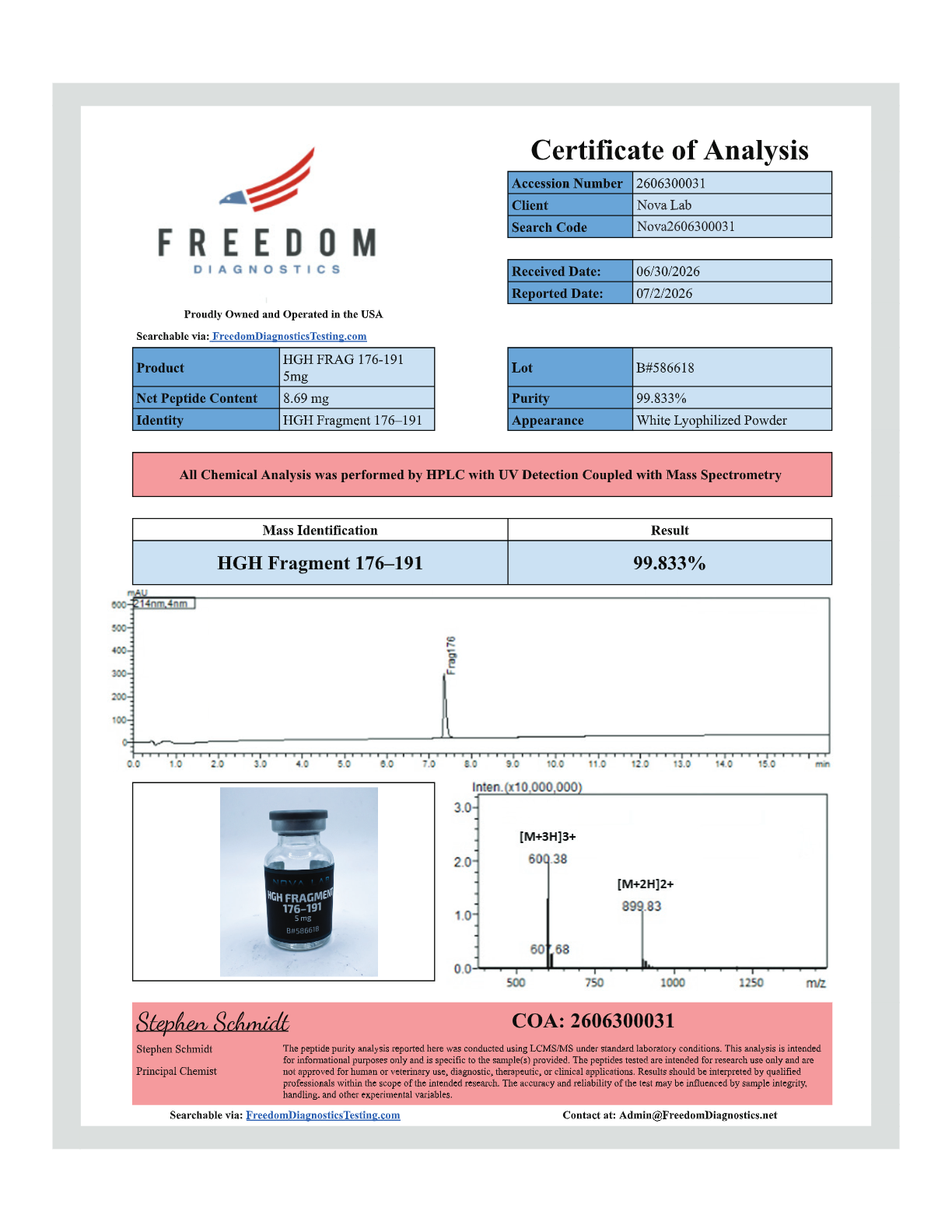
Analytical documentation for HGH Fragment 176-191 is provided to document the reported composition and analytical characteristics of the sample.
The available certificate contains identification and verification information that can be reviewed against the original report.
Freedom Diagnostic Testing:
freedomdiagnosticstesting.comNOVA LAB
Key information about our research topics and methodologies
The information provided on this website is intended for educational and informational purposes only. HGH Fragment 176-191 is a research compound and is not an approved medical treatment. Research findings, including findings involving related compounds such as AOD-9604, should not be interpreted as evidence of established clinical efficacy or safety for HGH Fragment 176-191.